AD1

Correct Desk Height: The Key to Comfort, Focus, and Productivity

Why Desk Height Matters

Most of us spend countless hours each day sitting at a desk — working, studying, or creating. While we may focus on the style of the furniture or the size of the screen, one critical factor is often overlooked: the correct desk height.

The height of your desk has a direct impact on your comfort, posture, and long-term health. A desk that is too high can cause shoulder and neck tension, while one that is too low can lead to slouching, back pain, and decreased focus. For designers and end users alike, correct desk height is not just a detail — it’s a foundation for well-being and productivity.

How to Determine the Correct Height for Your Desk

So, what is the correct desk height? For most adults, the standard desk height ranges from 71 to 76 cm (28 to 30 inches) from the floor to the desktop. However, the “one-size-fits-all” approach doesn’t work for everyone.

The correct desk height depends on your individual body dimensions and posture. As a general rule:

  • When seated, your elbows should form a 90–100-degree angle when resting on the desk.
  • Your feet should rest flat on the floor, with your thighs parallel to the ground.
  • Your shoulders should remain relaxed, not raised or hunched.

By adjusting your desk to match your height and seating style, you reduce strain on your body and support better posture throughout the day.

Steps to Calculate the Correct Desk Height

Whether you are sitting or standing, the following steps can help you determine the correct desk height:

For Sitting

  1. Sit in your chair with your feet flat on the floor.
  2. Position your elbows at your sides and bend them at a 90-degree angle.
  3. The surface of your desk should align with your forearms.

For Standing

  1. Stand upright with your shoulders relaxed.
  2. Bend your elbows at a 90-degree angle.
  3. The top of your desk should meet your forearms, allowing your wrists to remain straight as you type or write.

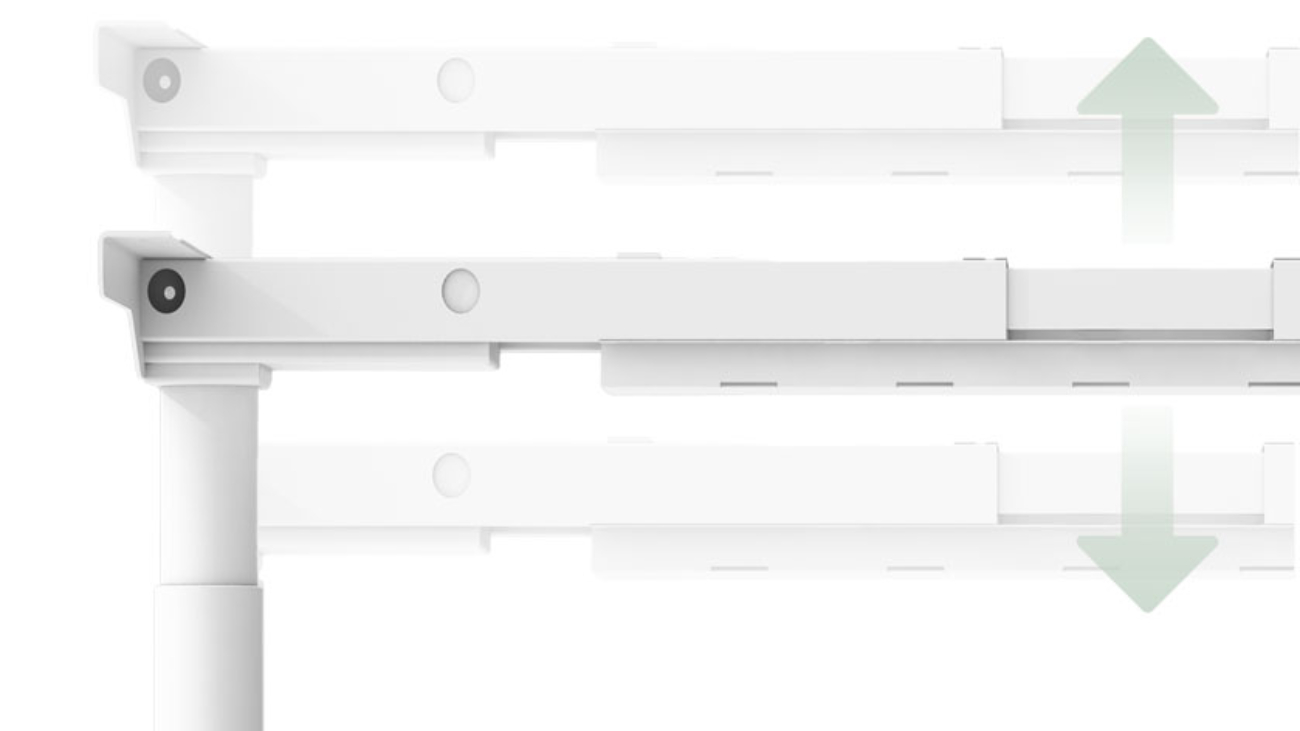
Adjustable desks make it easy to switch between sitting and standing positions, ensuring you maintain the correct desk height throughout the day.

The Role of Ergonomic Furniture in Achieving Correct Desk Height

Finding the correct desk height is not just about numbers on a chart — it’s about creating a workspace that adapts to you, not the other way around. This is where ergonomic furniture becomes essential, bridging the gap between theory and real-world comfort.

  • Height-adjustable desks give users the freedom to shift between sitting and standing with ease. Instead of being locked into a single position, you can adapt to your desk height throughout the day, improving circulation, reducing fatigue, and maintaining focus.
  • Ergonomic chairs complement desk adjustments by supporting natural posture. With proper seat height and lumbar support, your body stays aligned, and your desk height works in harmony with your sitting position.
  • Monitor arms and stands ensure your screen meets your eye level, preventing neck strain and letting you keep a relaxed posture. When paired with the correct desk height, they create a seamless line from your eyes to your hands.

Together, these solutions transform your desk from a static surface into a dynamic environment. Instead of fighting against your furniture, you’re supported by it — every adjustment leading to less tension, better comfort, and healthier workflow.

Correct Desk Height Builds Better Work and Better Life

Correct desk height is more than a number — it’s a key to healthier posture, sharper focus, and greater productivity. Whether you’re designing a workspace or upgrading your own, paying attention to desk height creates long-term benefits for both body and mind.

When combined with ergonomic furniture and thoughtful design, the correct desk height transforms your desk from a simple surface into a foundation for better living and working.

FAQs

1. What is the standard desk height?

The standard desk height is typically 71–76 cm (28–30 inches), but the correct desk height depends on your body measurements and posture.

2. How do I know if my desk is the wrong height?

If you often experience shoulder tension, wrist discomfort, or find yourself slouching, your desk height may not be correct.

3. Do I need a height-adjustable desk to achieve the correct desk height?

Not necessarily. While fixed desks can be paired with the right chair and accessories, an adjustable desk offers flexibility to fine-tune your workspace and switch between sitting and standing.
reportpic2

Standing Desk Market Size and Share Forecast Outlook 2025 to 2035

The Standing Desk Market is estimated to be valued at USD 8.7 billion in 2025 and is projected to reach USD 14.8 billion by 2035, registering a compound annual growth rate (CAGR) of 5.5% over the forecast period. This growth is supported by a steady CAGR of 5.5%, driven by increasing awareness of the health benefits of standing while working, and a rising focus on ergonomic office solutions. In the first five-year phase (2025–2030), the market is expected to grow from USD 8.7 billion to USD 11.3 billion, adding USD 2.6 billion, which accounts for 42.6% of the total incremental growth, fueled by the adoption of hybrid working models and the growing demand for ergonomic furniture in both corporate and home office settings.

The second phase (2030–2035) contributes USD 3.5 billion, representing 57.4% of incremental growth, reflecting sustained demand for standing desks as flexible workspaces and corporate wellness programs continue to grow. Annual increments increase from USD 0.5 billion in early years to USD 0.7 billion by 2035, as companies and individuals prioritize productivity and health. Manufacturers focusing on design innovations, adjustable features, and ease of use will capture the largest share of this USD 6.1 billion opportunity.

Quick Stats for Standing Desk Market

  • Standing Desk Market Value (2025): USD 8.7 billion
  • Standing Desk Market Forecast Value (2035): USD 14.8 billion
  • Standing Desk Market Forecast CAGR: 5.5%
  • Leading Segment in Standing Desk Market in 2025: Electric (48.0%)
  • Key Growth Regions in Standing Desk Market: North America, Asia-Pacific, Europe

Why is the Standing Desk Market Growing?

The growing concern over sedentary lifestyles and their impact on posture, productivity, and chronic health conditions has driven demand for height-adjustable and flexible workstation solutions. Increased adoption of remote and hybrid work models has further amplified the need for customizable home-office setups. Rising corporate wellness programs and employer investment in preventive health infrastructure have also contributed to the increased penetration of standing desks.

Advancements in motorized adjustment systems, material durability, and sustainability practices are reshaping product development strategies across the industry. As consumer behavior shifts toward proactive wellness and functional aesthetics, the market is expected to maintain steady growth, supported by innovations in design, smart desk integration, and global workplace transformation initiatives..

Segmental Analysis

The standing desk market is segmented by product type, material, traditional desks, price range, distribution channel, and geographic regions. By product type, the standing desk market is divided into Electric, Fixed, Manual, and Others (Converter, etc.). In terms of material, the standing desk market is classified into Wood, Metal, Glass, Composite material, and others (Bamboo, etc.). Based on traditional desks, the standing desk market is segmented into L-Shaped desks, U-Shaped desks, and convertible desks. The price range of the standing desk market is segmented into Commercial, Residential, and Industrial. The distribution channel of the standing desk market is segmented into online and offline. Regionally, the standing desk industry is classified into North America, Latin America, Western Europe, Eastern Europe, Balkan & Baltic Countries, Russia & Belarus, Central Asia, East Asia, South Asia & Pacific, and the Middle East & Africa.

The electric product type segment is anticipated to hold 48% of the Standing Desk market revenue share in 2025, positioning it as the leading product type. Growth in this segment has been attributed to its superior ease of use, programmable settings, and smooth height transition mechanisms that support ergonomic flexibility.

Unlike manual alternatives, electric standing desks are equipped with motorized lift systems that allow seamless switching between sitting and standing positions, enhancing user comfort and productivity. Increased demand for smart and automated furniture solutions in both residential and commercial office environments has accelerated the preference for electric variants.

Moreover, the segment has benefited from integration with digital interfaces, such as memory presets and posture reminders, which align with modern wellness and technology trends. As employers seek to improve employee engagement and health outcomes, investment in electric standing desks has been prioritized, supporting its continued leadership in the product type category..

What are the Drivers, Restraints, and Key Trends of the Standing Desk Market?

The standing desk market is driven by rising demand for ergonomic office solutions and is further fueled by the growth of remote work and wellness programs. Opportunities in adjustable and smart desk trends continue to shape the market. However, challenges like high costs and space limitations may hinder adoption. By 2025, addressing these barriers will be key to ensuring sustained growth and broader market access.

Rising Demand for Ergonomic Office Furniture Solutions

The standing desk market is growing due to the increasing demand for ergonomic office furniture. As more people work from home or spend extended hours at desks, the need for furniture that promotes better posture and reduces back pain is rising. Standing desks are seen as a solution for improving workplace health and productivity. By 2025, the market is expected to continue expanding as businesses and individuals prioritize comfort and well-being in office setups.

Opportunities in Expanding Remote Work and Corporate Wellness Programs

Opportunities in the standing desk market are increasing with the rise of remote work and corporate wellness programs. As more companies adopt flexible work-from-home policies, employees are seeking ways to improve their home office setups, including investing in standing desks. Corporate wellness initiatives, which promote healthier working environments, are also driving adoption. By 2025, these trends are expected to create substantial growth opportunities in the market, particularly in sectors that prioritize employee health.

Emerging Trends in Adjustable and Smart Standing Desks

Emerging trends in the standing desk market include the growing popularity of adjustable and smart standing desks. Adjustable desks that allow users to switch between sitting and standing positions are gaining traction, providing flexibility and comfort. Smart desks, integrated with technology that tracks user activity and provides reminders to stand, are also gaining attention. By 2025, these trends are expected to become dominant in the market, as users seek personalized, tech-driven office solutions.

Challenges from High Costs and Limited Space in Homes

Despite growth, the standing desk market faces challenges related to high costs and limited space in home offices. While standing desks provide health benefits, their higher price point compared to traditional desks can limit adoption, particularly among cost-conscious consumers. Additionally, in smaller living spaces, the large footprint of some standing desks may discourage use. Overcoming these challenges through cost-effective, compact solutions will be crucial for expanding the market by 2025.